Published 18 August 2026 · Listen And Rate editorial desk
Chin Swee Road Murder is a narrative documentary episode on Spotify. This review assesses the work as audio journalism — structure, narration, sound design, sourcing, and restraint — without retelling the events the episode discusses.
Worth listening if you want a locally grounded true-crime hour that prioritises clarity over shock. The episode earns its length when it slows down for procedural detail and loses ground when it compresses timeline gaps without signalling uncertainty. Not recommended as a first introduction to Singapore true-crime audio if you prefer lighter formats — this is a serious hour.
The estate the episode names is ordinary Singapore housing, not a cinematic backlot — our review holds the audio to that standard.
Structure and opening
The episode opens with ambient street sound rather than a dramatic re-enactment — a choice that signals documentary intent early. The first five minutes establish place before person: Chin Swee Road as a lived neighbourhood, not merely a headline location. That sequencing respects listeners who know the area and orients those who do not.
Mid-episode transitions between narration and archive material are generally clean, though one section rushes a court adjournment that deserved another sentence of context. The close returns to the estate rather than to a moral summary — appropriate restraint for material where families may still be affected.
Narration and pacing
The narrator speaks in measured Singapore English, avoiding the performed gravitas common in imported true-crime formats. Sentences are long enough to carry qualification — "according to trial coverage," "as reported at the time" — which builds trust even when the underlying facts are familiar from news archives.
Pacing slackens slightly in the second third when background institutional history could have been trimmed. A patient listener will stay; a casual listener may skip. We note this not as failure but as audience calibration: the episode targets informed curiosity, not background noise.
Sound design
Room tone and street ambience are used sparingly — illustrating location without directing emotion. Scoring, where present, stays low in the mix and withdraws during witness-adjacent passages. One transition uses a stinger that feels borrowed from television crime drama; it is brief but unnecessary in an otherwise disciplined mix.
Sourcing and limits
The episode acknowledges reliance on public reporting and court records without pretending to independent investigation. That transparency is a strength. Where archive audio is unavailable, the narration states the gap rather than filling it with speculative reconstruction — a standard more Singapore true-crime podcasts should adopt.
Restraint and ethics
Graphic detail is present but bounded. The work avoids naming private individuals tangential to the case and does not treat crime-scene photography as spectacle. For listeners sensitive to descriptions of violence, the hour still demands preparation — the subject matter is inherently difficult — but the makers do not sensationalise for engagement metrics.
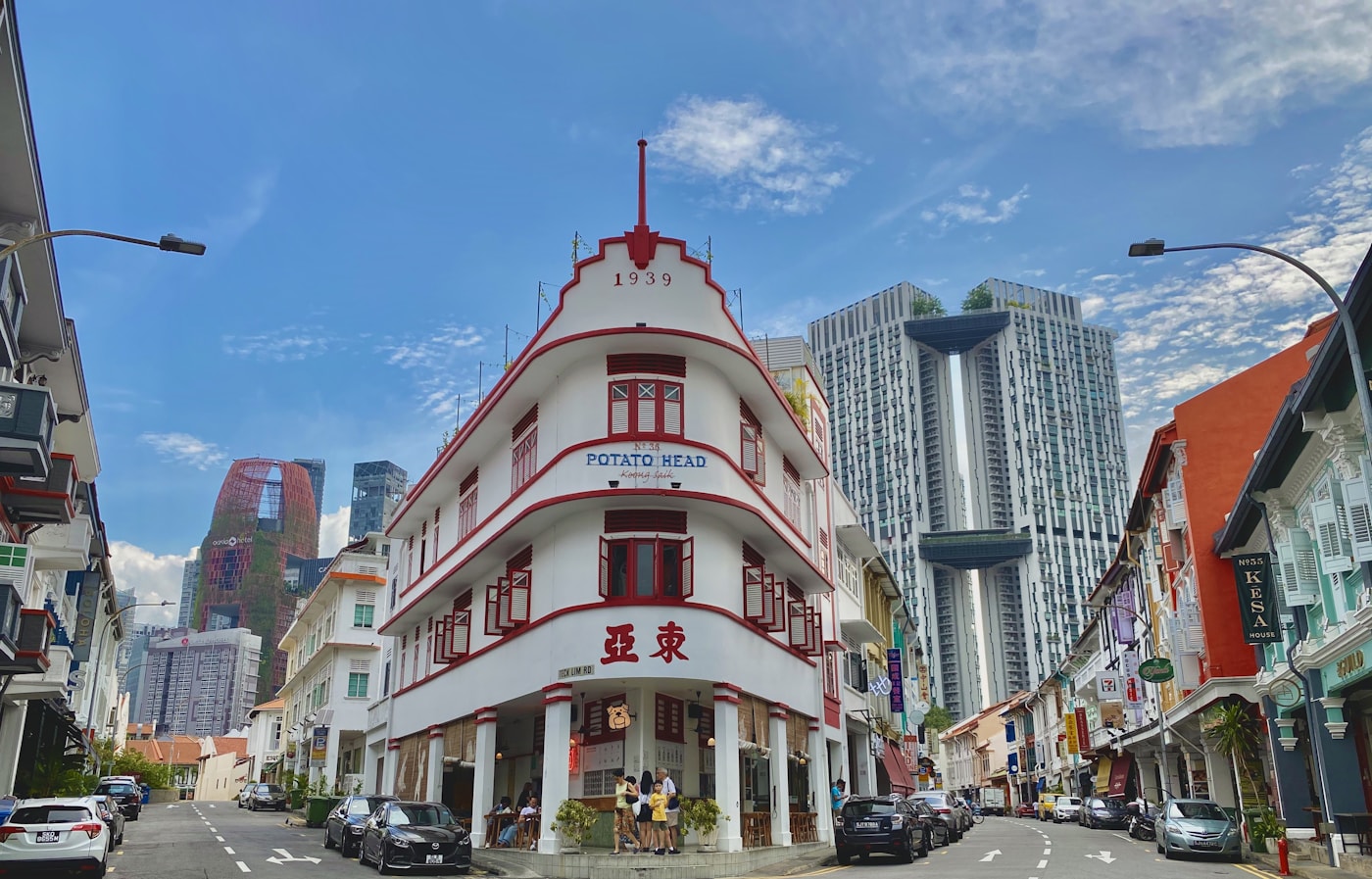
Chinatown after dark — the same district the episode walks through in street sound, without turning the skyline into spectacle.
Who should listen
Listeners who follow Singapore legal reporting, who live near Outram or Chin Swee Road, or who want a single-episode deep dive rather than a serial feed will find the hour well spent. Those seeking resolution entertainment or rapid-fire case summaries should choose a different format.
Final ledger summary
Taken together, the episode earns a recommendation for listeners who prioritise local grounding and sourcing transparency over cinematic production. It is not the easiest entry point for true-crime newcomers. Pair this hour with our listening guidance on the homepage before exploring heavier instalments elsewhere on Spotify.
We note whether critical information is conveyed only through audio cues unavailable to deaf or hard-of-hearing listeners. When platforms provide auto-transcripts, we spot-check for errors that might misstate legal terms or names. We do not reproduce full transcripts on our Site — rights and accuracy belong on the platform — but we flag when reliance on narration alone may exclude part of the audience.
Comparison with regional true-crime audio
Imported feeds often assume American courtroom procedure and police customs. This episode stays within Singapore idioms and institutional rhythms — a meaningful advantage for local listeners even when production values are less flashy. We mention comparison not to rank countries but to help listeners calibrate expectations before pressing play.
Update policy for this review
If the episode is re-uploaded with material edits, we re-listen and amend this page with a dated note. Minor platform metadata changes alone do not trigger republication. Corrections from readers are welcome at the contact address listed site-wide.